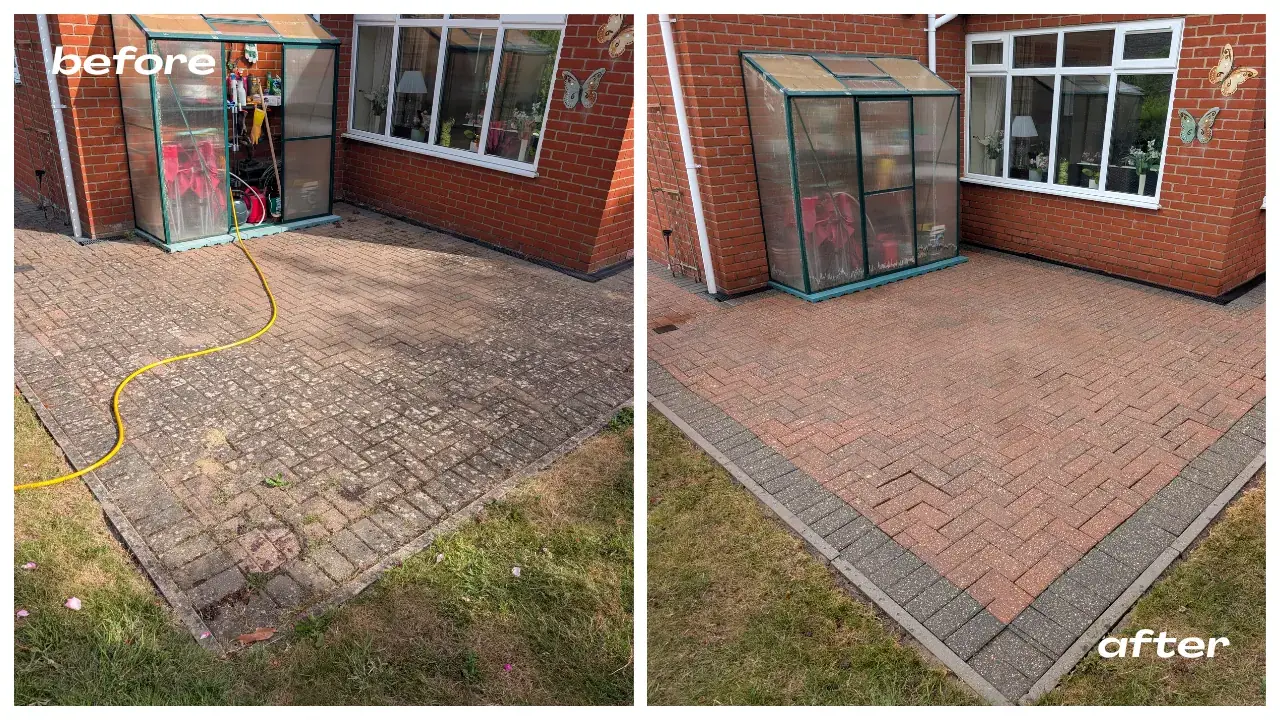
Is keeping the old paving always the economical choice?
Not always. If slabs are extensively broken or the installation is unstable, repair or replacement may be more appropriate. Restoration is worth considering where enough of the patio is sound to retain. The condition and proposed workload matter more than a general claim about savings.
Can new pointing be placed over old crumbling joints?
Preparation is an important part of the proposal. Covering deteriorated material is different from removing failed mortar and preparing the gaps for suitable repointing. Ask which approach is being quoted and why it fits the existing paving.
Will colour enhancement make everything identical?
No. It may emphasise existing tones on suitable stone, while variations, repairs and ingrained marks can remain. Discuss the finish before it is applied. A product chosen to enhance the surface is not a substitute for replacing a damaged or mismatched slab.
What if I do not know the earlier sealer?
Say that it is unknown and describe when the work was done, if you can. Photographs of patchiness or coating failure help. The existing finish needs consideration before another is proposed; guessing compatibility can create an unrealistic expectation.
Can the restoration be split into visits?
It may need separate stages for cleaning, drying, jointing and a compatible finish. Agree the sequence and essential access before starting. A return visit should be made clear in the quotation rather than left as an unexpected extra after the patio is washed.
What aftercare should I ask for?
Ask about ordinary cleaning, moving furniture, use after jointing and maintaining any applied finish. Instructions should match the products and installation. Avoid introducing an unfamiliar chemical merely because it worked on a different patio; the restored materials need their own appropriate care.